

Climate Communication Through Documentary Storytelling
Why the stories we tell today will shape the climate actions of tomorrow.
Climate change is no longer a distant scientific prediction. It is a lived reality. Around the world, communities are facing stronger cyclones, prolonged droughts, devastating floods, rising sea levels, biodiversity loss, and increasing threats to food security. Yet despite decades of research and countless reports, the gap between scientific knowledge and public action remains significant.
The challenge is not only about communicating facts—it is about creating understanding, empathy, and motivation.
This is where documentary storytelling becomes one of the most powerful tools for climate communication.
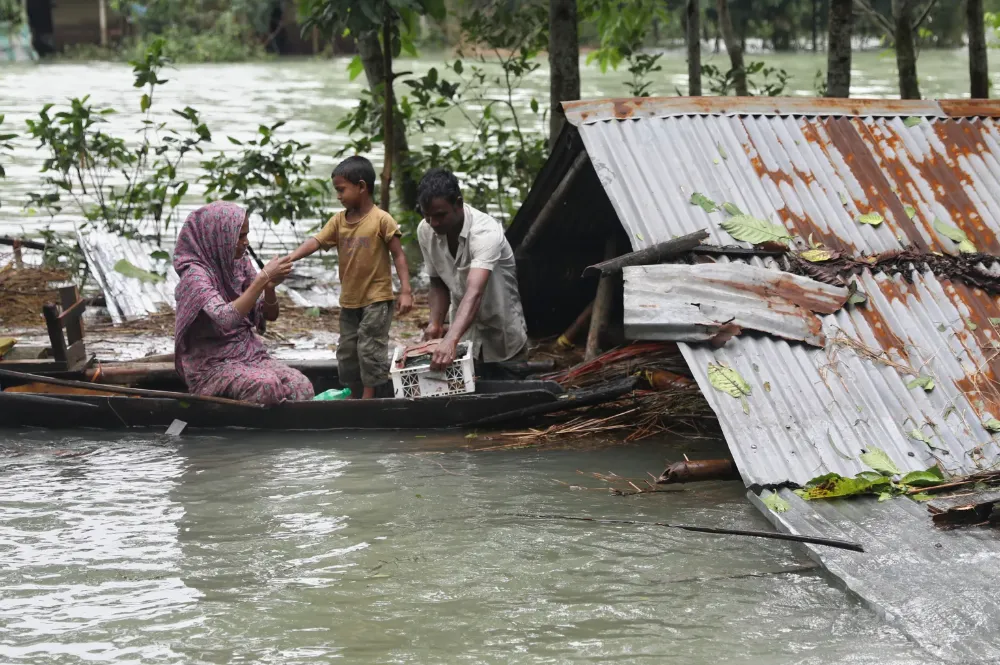
Beyond Data: The Human Face of Climate Change
Scientific evidence is essential. It explains what is happening and why it matters. However, numbers alone rarely inspire lasting emotional engagement.
A documentary introduces audiences to real people.
A fisherman watches the river that once sustained his family disappear.
A farmer struggles to grow crops after repeated floods.
A child walks farther each year to collect safe drinking water.
An Indigenous community fights to protect forests that have supported generations.
These are not statistics. They are human experiences.
When audiences connect with people rather than numbers, climate change becomes personal rather than abstract.
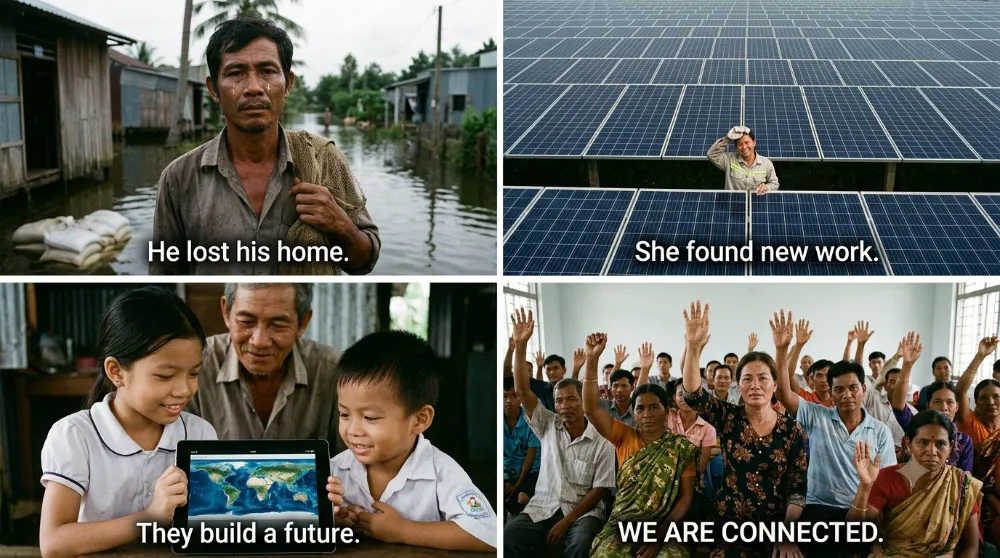
Storytelling Creates Emotional Connection
Throughout history, people have understood the world through stories.
Stories help us remember.
Stories help us empathize.
Stories help us imagine change.
Documentary films combine journalism, research, visuals, sound, and lived experiences into narratives that audiences can both understand and feel. Unlike traditional awareness campaigns, documentaries allow viewers to witness reality through the eyes of those directly affected.
This emotional connection often becomes the first step toward meaningful climate action.
Local Stories Have Global Significance
Climate change is a global crisis, but its impacts are experienced locally.
A documentary filmed in a small coastal village in Bangladesh can resonate with audiences in New Zealand, Canada, Kenya, or Brazil because vulnerability, resilience, and hope are universal human experiences.
Local stories remind us that climate change is not affecting "someone else."
It is affecting all of us.
When local voices are amplified, they contribute to a richer and more inclusive global climate conversation.
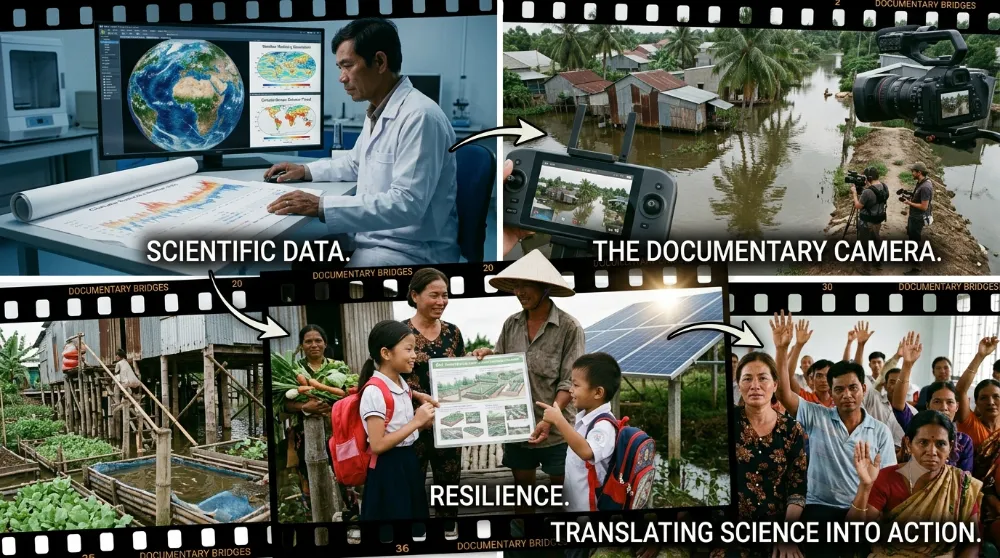
Documentary as a Bridge Between Science and Society
Researchers produce evidence.
Policy-makers develop strategies.
Communities experience reality.
Documentary filmmakers have the unique opportunity to connect these worlds.
A well-crafted documentary can translate complex scientific concepts into accessible visual narratives without sacrificing accuracy. It enables experts and local communities to speak within the same story, making scientific knowledge more understandable and relevant to everyday life.
In this way, documentary filmmaking becomes more than an artistic practice—it becomes a bridge between knowledge and action.
Preserving Climate Memory
One of the documentary's most overlooked contributions is preservation.
Many communities are losing more than homes or livelihoods.
They are losing traditions.
Languages.
Cultural practices.
Sacred landscapes.
Ways of life that have existed for centuries.
Documentary storytelling preserves these memories before they disappear.
It creates an archive for future generations, ensuring that the human dimensions of climate change are not forgotten.
Inspiring Collective Action
The purpose of climate communication is not simply to inform.
Its purpose is to inspire action.
Effective documentaries encourage audiences to ask difficult questions:
What responsibilities do governments have?
How can businesses contribute to sustainable development?
What role does education play?
What changes can individuals make within their own communities?
When viewers leave a documentary with greater understanding and a stronger sense of responsibility, storytelling has achieved something data alone often cannot.
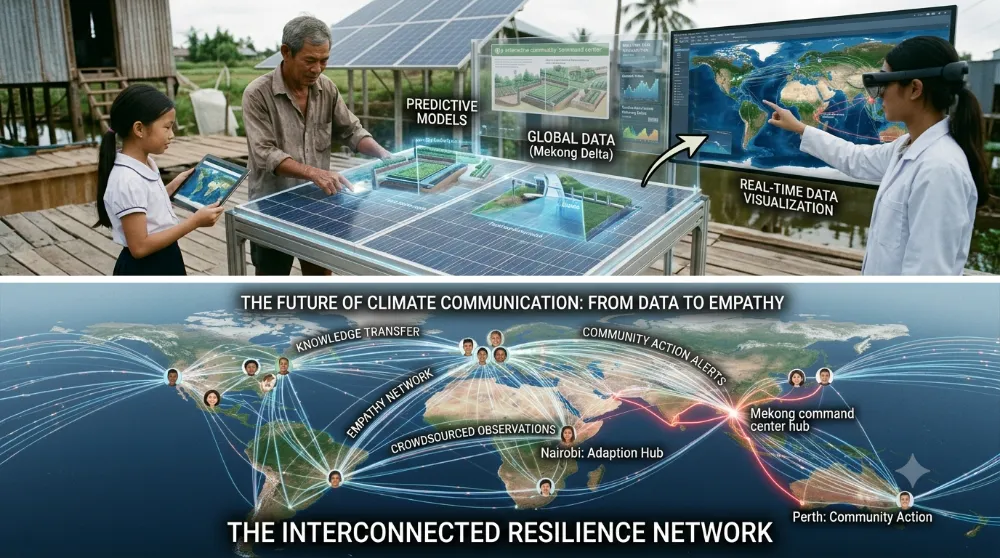
The Future of Climate Communication
As climate risks continue to increase, communication strategies must evolve.
The future demands approaches that are interdisciplinary, participatory, culturally sensitive, and emotionally engaging.
Documentary storytelling offers exactly that.
It combines evidence with empathy.
Research with reality.
Policy with people.
Science with stories.
In an era of misinformation and information overload, authentic visual storytelling has the potential to rebuild trust, amplify marginalized voices, and foster informed public dialogue.
My Perspective
Having spent more than two decades in television and documentary production, I have witnessed the extraordinary power of stories to influence public understanding. Through my work in climate communication and documentary filmmaking, I have come to believe that every community holds knowledge worth preserving, every individual has a story worth telling, and every documentary has the potential to contribute to a more resilient future.
Climate communication is not only about explaining environmental change.
It is about documenting humanity's response to it.
Because when future generations ask how we faced the defining challenge of our time, our documentaries may become some of the most important records we leave behind.
What role do you think documentary storytelling should play in accelerating climate action? I would love to hear your perspective in the comments.
Ashraful Alam
Founder, GTD Media Production
Climate Communication Researcher | Documentary Storyteller
Preserving What Time, Change & Climate Cannot Afford to Erase